February 06, 2017

Module 3 Flotsam


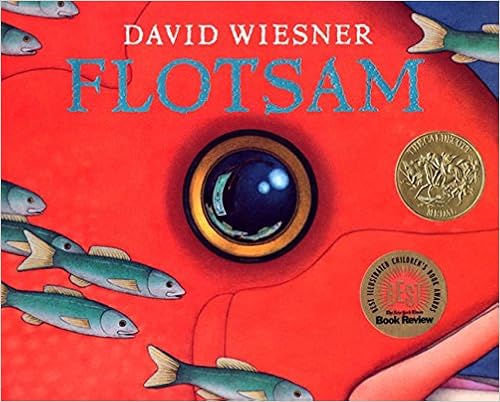
Book Cover


APA Reference of Book:
Weisner, D. (2006). Flotsam. New York, NY: Clarion Books.

Book Summary:
Since this is a picture book the plot is determined by the readers. The front and end pages are beautifully illustrated to look like the beach or items found at a beach. A boy is at a beach and is exploring and finds a camera with film in it so he takes it to be developed. Strange things are in the pictures he found. At the end he takes a picture of himself and throws the camera back into the water.

Impressions:
The artwork is stunning and very realistic with bright colors to match the season and being at the beach. The story is wonderfully told through the pictures and including the wonder and surprise of of what the boys sees in the pictures. There are enough pictures to tell the story but there are enough gaps as well to develop your own spin on what exactly is going on and how the story ends. I will definitely have to keep this author on my to buy list!

Professional Review:
Two-time Caldecott winner Wiesner (Tuesday; The Three Pigs) crafts another wordless mystery, this one set on an ordinary beach and under an enchanted sea. A saucerlike fish's eye stares from the exact center of the dust jacket, and the fish's scarlet skin provides a knockout background color. First-timers might not notice what's reflected in its eye, but return visitors will: it's a boxy camera, drifting underwater with a school of slim green fish. In the opening panels, Wiesner pictures another close-up eye, this one belonging to a blond boy viewing a crab through a magnifying glass. Visual devices--binoculars and a microscope in a plastic bag--rest on a nearby beach towel, suggesting the boy's optical curiosity. After being tossed by a wave, the studious boy finds a barnacle-covered apparatus on the sand (evocatively labeled the "Melville Underwater Camera"). He removes its roll of film and, when he gets the results, readers see another close-up of his wide-open, astonished eye: the photos depict bizarre undersea scenes (nautilus shells with cutout windows, walking starfish-islands, octopi in their living room à la Tuesday's frogs). A lesser fantasist would end the story here, but Wiesner provides a further surprise that connects the curious boy with others like him. Masterfully altering the pace with panel sequences and full-bleed spreads, he fills every inch of the pages with intricate, imaginative watercolor details. New details swim into focus with every rereading of this immensely satisfying excursion. Ages 5-8. (Sept.)

Flotsam. (2006). Publishers Weekly, 253(29), 56-57

Library Uses: 
I would use this as a story telling example. I would give students a page and have them make up a story or even write it. You could also break up the pictures and have them decide what order they should go in for inference or sequencing.


My Rating: ****

February 01, 2017

Update from 9/5/2011 post

Ok since I haven't put up whether I read the books posted here is what I put on Goodreads:

Enclave: Loved it and want to read more! Gave it ****

All others I have not read yet. However I still have copies of some and since they may be on list for my UNT library class plan to read.  OMG this is soooo bad more than 6 years later. 


Books I still have copies and plan to read:

Hex Hall (Hex Hall, #1)Supernaturally (Paranormalcy, #2)
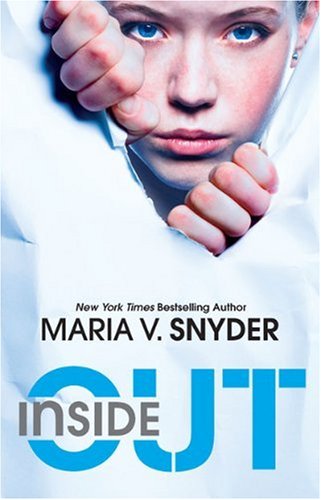
Infinite Days (Vampire Queen, #1)Inside Out (Insider, #1) 
The CompoundDark Life (Dark Life, #1)Infinity (Chronicles of Nick, #1)
Blood Red Road (Dustlands, #1) Secrets and ShadowsSchool of Fear

Module 2 The Snowy Day

The Snowy Day

Book Cover:

Book Summary:

APA Reference of Book:
Keats, E. J. (1962). The snowy day. New York: Viking Press.

Impressions:

Professional Review:
In this mood book, never static but sparkling with atmosphere in lovely water-color pictures, a small boy experiences the joys of a snowy day. The brief, vividly expressed text points out his new awareness of the sight and texture of snow (the crunch, crunch of his feet making tracks), the sound (the plop of snow smacked off a tree with a stick), and the fun of playing with snow — then his thinking and thinking about the outdoor adventures later in warm bathtub and bed, while more snowflakes fall. Perfect for a snowy day’s preschool story hour.

Haviland, V. (1963, February). The Snowy Day. The Hornbook Magazine. Retrieved February 1, 2017, from http://www.hbook.com/1963/02/choosing-books/reviews/review-of-the-snowy-day/#_

Library Uses:


My Rating:

Module 1 Little Red Writing

Book Cover:

Little Red Writing


Book Summary: 
Little Red needs to write a story and she traveled around the school looking for ways to make her writing better. Some of the places she went included the gym for adding excitement, the library for descriptive words, and the supply closet to add longer sentences (without punctuation stops). Finally she gets to the Principal office where the Wolf 3000 pencil sharpener took Principal Granny's place. Little Red saved the Principal by blowing up the sharpener. She then wrote her own story based on what happened and read it to the class.

APA Reference of Book:
Holub, J., & Sweet, M. (2013). Little Red writing. San Francisco, CA: Chronicle Books.

Impressions:
The front pages included things from the story like a conversation between characters and a newspaper from the school Little Red is at. The paper includes the copyright information on it. I really like when books use front and end pages to help tell the story and this was cute. I liked the bright cheery colors and illustrations that looked a little bit like a comic or graphic novel. There were different types of text structures and styles all through the book to help differentiate between story and talking of characters. Vocabulary was excellent throughout the book with words such as boogied, hingered, squirrely, and many more instead of weak words. The plot showed how Little Red wanted to write a great story and her problems going about doing it but set in the story of Little Red Riding Hood. So any age group could identify with it. Due to the busy pictures and high vocabulary I would think this could be independently read in second grade to fifth grade.

Professional Review:
Balanced gracefully on her point, Little Red is a courageous young pencil with a storytelling assignment from school. While the other young pencils choose to write about "Pencilvania" or themes based on their novelty erasers, Little Red decides to compose a heroic story. "Remember, it's OK to wander a little, but stick to your basic story path so you don't get lost," warns her teacher, Ms. 2. Holub (Zero the Hero) cleverly combines two elementary-school formulas--the fairy tale and the writing exercise--as she shares the basics of storytelling and grammar. When Little Red activates her narrative with verbs, she "cartwheel[s] right off the page and into… a deep, dark, descriptive forest" where words like "verdant" and "bosky" decorate leaves. Sweet (River of Words) illustrates in a flurry of colored pencil, watercolor, and collage. On yellowed, heavily doodled composition notepaper, she playfully mingles calligraphy, classroom settings, and images of Red defeating a sharp-toothed foe, the Wolf 3000 pencil sharpener. With style, humor, and solid writing advice, Holub and Sweet point out the latent creative potential within any desk drawer or supply cabinet. Ages 5--8. Author's agent: Liza Pulitzer Voges, Eden Street Literary. (Oct.)

Little Red Writing. (2013). Publishers Weekly, 260(36), 56-57

Library Uses:
There can be many uses for this story! You can focus on the one or several of the writing aspect in the story such as plot, word choice, or punctuation. I would focus on comparing fractured fairy tales. I would read this with another Little Red Riding hood story such as Ninja Red Riding Hood, Lon Popo, or Little Red Cowboy Hat and make a chart for main character, problem, solution, setting, and anything else the students notice. This could also be a springboard for the upper grades to write their own retelling.

My Rating: ****


January 28, 2017

Module 1 Winston the Book Wolf

Book Cover:


APA Reference of Book:
McGee, M., & Beck, I. (2006). Winston the book wolf. New York: Walker.


Book Summary:
Winston likes to eat words and isn't allowed into the library because he destroys it. Rosie (little red riding hood) shows him how to read. Once he learns he disguises himself as Granny and gets inside without any problems. He becomes the story lady and reads to the children without destroying the books or library.


Impressions:
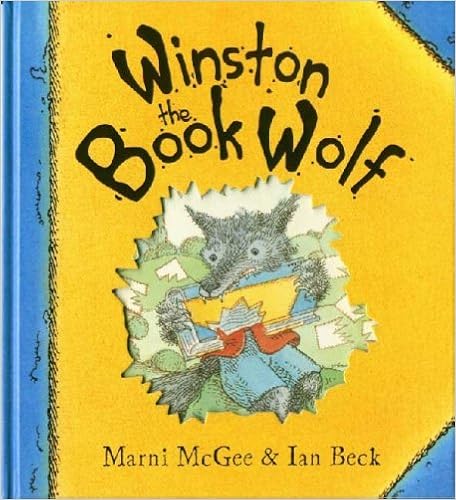
The story was cute and included different fairy tale characters sprinkled through out the book. Text was used in mini boxs that were "bitten" and some curved around the pages. However the same font was used throughout even the bold and separated interesting words. The pictures were cartoony with a grainy or block printing look about them. While I liked the idea that Winston loved to eat words and learns to read,  I didn't like that he wasn't allowed in the library and had to trick them to get in. So I am torn about whether I liked it enough to use it again. I do think that it redeems itself a little bit when it talks about reading the books rather than eating them. It does have a few good words for vocabulary.

Professional Review:

Some wolves like to eat little pigs; some have a penchant for grannies, but Winston can't get enough of words. Banned from the library for literally devouring books (the paper-over-board book's cover has a bite-size die-cut hole), he's taken under the wing of Rosie, who just happens to sport a red-hooded sweatshirt. She tutors him in a more socially acceptable and personally fulfilling approach to savoring words. ""Winston caught on fast. He learned to eat words with his eyes, which is to say: Winston learned to read!"" With that mission accomplished, Rosie and Winston next conspire to get him back into the library-and with the help of some of Grandma's clothes and a natural flair for drag, Winston soon draws record crowds as the Story Lady. ""If anyone noticed the sharp, white teeth, no one complained,"" McGee says with a wink. The text may be wordy, but Beck's (Tom and the Island of Dinosaurs) illustrations exude a breezy, contemporary feel, from his delicate ink lines and washes of cheery color t

Winston the Book Wolf. (2006, August, 7). Publishers Weekly [Book Review]. Retrieved from http://www.publishersweekly.com/978-0-8027-9569-4

Library Uses: 
For grades kinder through fifth grade readers I would have a display wall of words that are great words that Winston may have eaten that students have found in their books that they are reading. I would put out index cards and crayons or pencils for them to write the word on and their name. Then either they would post them or I would provide a box to put them in to have an adult or help put up.


My Rating:  ***

Library Degree

I am going back to school for my Masters in Library Science. One of my classes requires me to post reviews of books. Since I already had a book blog I revamped it with a pretty new look and updated some other tech stuff.

I hope to keep posting book reviews and other book related stuff after the class since I plan to be a Librarian and can use this site for my new library OR for getting a library job!

Stay tuned!

September 05, 2011

Currently Reading

Well school has started and I am in the thick of things. I am currently reading In Search of Wondla during my DEAR time at school and it is going great! I love the pcituers and there is lots of vocabulary that I think would be great for my third graders. Thinking of maybe using this as a read aloud (when during the day I don't know).

 The Search for WondLa by Tony DiTerlizzi
Hex Hall (Hex Hall, #1)Supernaturally (Paranormalcy, #2)Fallen (Fallen, #1)
Infinite Days (Vampire Queen, #1)Inside Out (Insider, #1) Enclave (Razorland, #1)
The CompoundDark Life (Dark Life, #1)Infinity (Chronicles of Nick, #1)
Blood Red Road (Dustlands, #1) Secrets and ShadowsSchool of Fear
Also on deck in my tbr pile:
Supernaturally (Paranormalcy II) by Keirsten White
Bloodred Road by Moira Young
Infinite Days by Rachel Maizer
Fallen byLauren Kate
Secrets and Shadows (13 to Life II) by Shannen Delany
Enclave by Ann Aguirre
Hex Hall by Rachel Hawkins
Inside Out by Maria Snyder
Infinity (Chronicles of Nick) by Sheriyln Kenyon
The Compound by S.A. Boden
Dark Life by Kat Tallis
School of Fear by Gityy Daneshvari
I am most excited to read Supernaturally, Blood Red Road and Enclave. My favorite covers are Dark Life (soo ethereal) and Blood Red Road (this is Dystopian/Apocalyptic and the mood of this cover really captures the feel).